Vehicles & equipment
Rigs & gear
What you're towing it in, how it stays powered and watered, and what breaks on corrugations.
Choosing a rig type
- Caravan
- The default choice for long laps — the most living space, but towing skill and campsite selection matter more than first-timers expect. An off-road-rated van with independent suspension is worth the premium if you're planning any unsealed stretches at all.
- Motorhome
- One vehicle, no towing — simpler at fuel stops, tight caravan-park sites and narrow tracks, at the cost of some living space and off-road ability. Popular with solo travellers for exactly that reason.
- Camper trailer
- Compact, generally the most capable off the bitumen when paired with a proper 4WD — the standard choice for people planning Gibb River Road or Cape York.
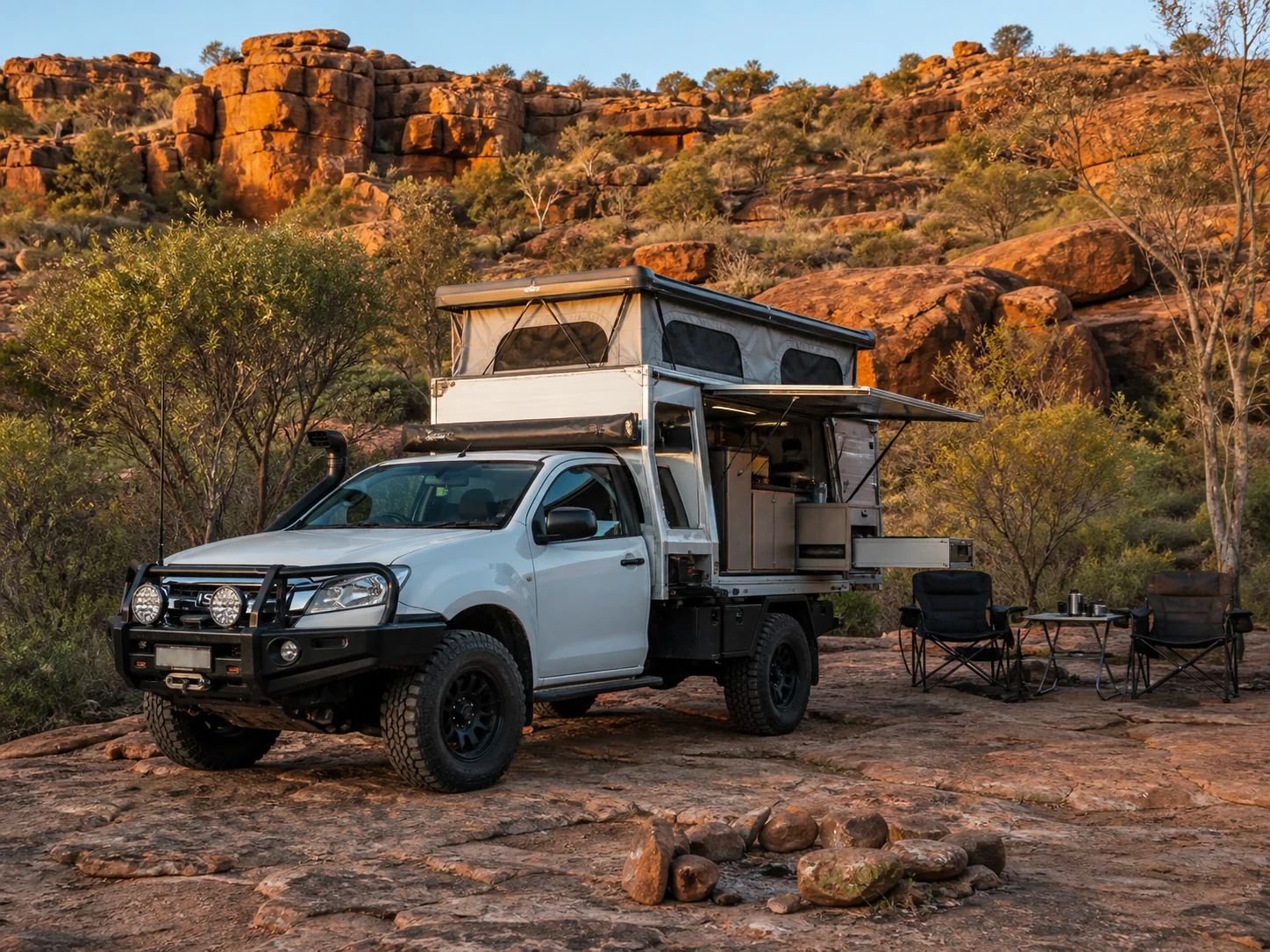
- Slide-on camper
- Mounts onto a ute tray, keeps full 4WD capability underneath — a niche but capable option for remote touring, less common for a first lap.
Solar and battery power
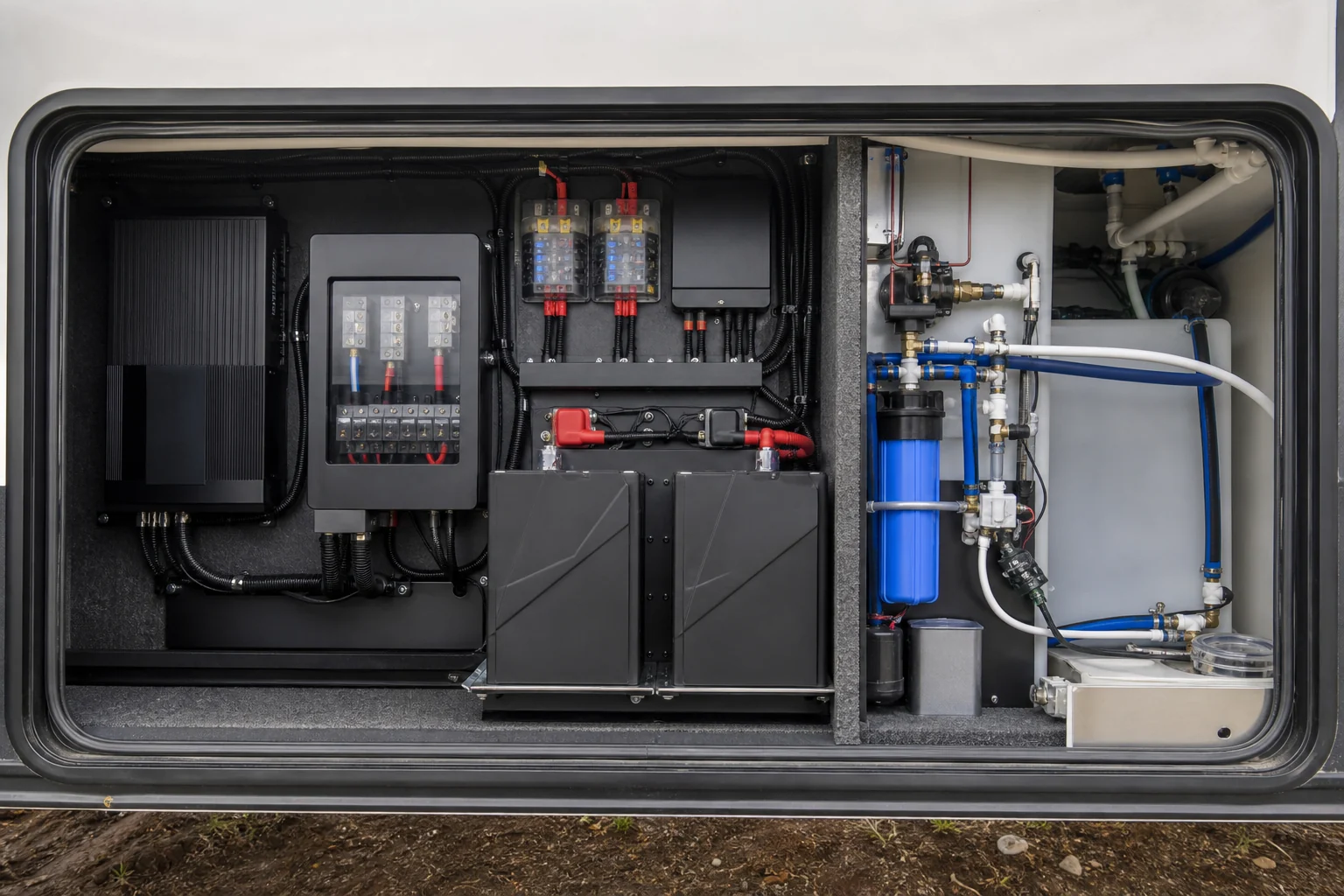
Free camping without power for days at a time is normal on the lap, and most rigs run on a house battery bank topped up by roof-mounted solar. As a rough guide, couples free camping regularly are usually comfortable with 200–400W of solar and at least 200Ah of lithium battery capacity — enough to run a 12V fridge, lighting, and charge devices without needing a generator most days.
Water and waste
Fresh water tank capacity matters more than most first-timers assume — 100–150L is a common minimum for a couple planning multi-day free camps. Grey water (from the sink and shower) needs to be caught, not tipped on the ground, at almost every free camp and national park site; a portable grey water tank solves this cheaply. Composting or cassette toilets are standard for extended off-grid stretches.
Kitchen, fridge and awning
A compressor fridge (12V, not a three-way gas/electric absorption fridge) is worth the extra upfront cost — it copes far better with Australian heat and doesn't need to be perfectly level to work properly. An awning or annexe adds genuinely useful living space at longer stops, particularly through the heat of the day in the tropical north.
Maintenance on the road
Corrugated roads shake loose what sealed roads never would — cabinet latches, wiring connections, and anything not properly torqued. A pre-departure service and a check of every external fitting is worth the cost. Carry a basic tool kit, spare fuses, cable ties and gaffer tape; between them they fix a surprising share of on-road problems.
Where to buy consumables on the road
Bunnings and Supercheap Auto have stores in most regional centres for hardware and vehicle basics; BCF (Boating Camping Fishing) and Anaconda are the two most common chains for camping-specific gear and replacement parts.
Towing safety
Weight distribution and sway control are worth getting professionally set up before you leave, not learned on the road — an incorrectly loaded van is one of the more common causes of serious towing incidents. Know your rig's actual towball weight and tow vehicle's rated capacity, and check both after you've packed, not just on paper.
Registration and insurance for long trips
Confirm your comprehensive insurer covers extended remote and unsealed-road travel before you leave — some standard policies have exclusions or higher excesses for genuinely remote routes like the Gibb River Road. It's a five-minute phone call that's worth having before, not after.
Still not sure which rig is right for you
A lot of rig decisions come down to specifics — your tow vehicle, your budget, how remote you actually want to get — that are hard to answer with general advice alone. See Services & Pricing for the full list.
Free account, real perks
Save your gear notes and shortlist to your free account
- Save routes, camps and gear notes — pick them back up from any device
- 10% off every paid planning service on this site
- A free Route Season-Check (normally AU$59) the first time you save a route