The practical stuff
On the road
Fuel planning, dump points, water refills and finding a mechanic when you're a long way from home.
Planning fuel stops
On remote crossings — the Nullarbor, the Savannah Way, Cape York — know your rig's real-world tank range before you commit to a departure time, and treat the posted distance between fuel stops as a minimum, not a comfortable margin. Fuel prices climb the further you are from a capital city; fill up in regional centres rather than the last servo before a long remote stretch. Apps like Fuel Map Australia and PetrolSpy show live pricing where coverage allows.
Worth carrying
A jerry can of spare fuel is standard practice on any crossing longer than your tank's rated range — treat the manufacturer's range as optimistic, especially towing into a headwind.
Dump points
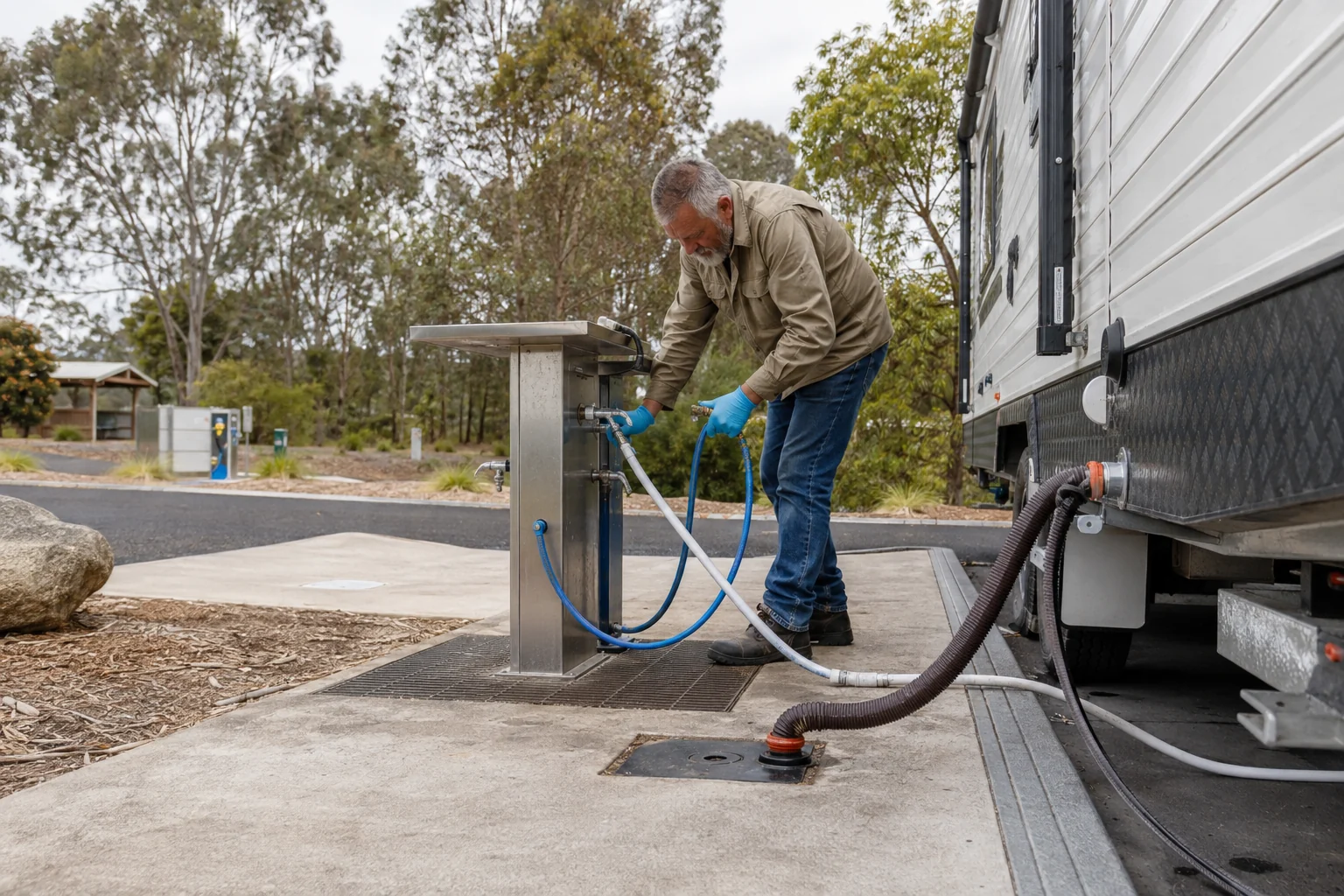
Black and grey waste must go into a proper dump point, never tipped on the ground or into a drain — most caravan parks have one, and many councils maintain free public dump points as well. WikiCamps Australia and CamperMate both list dump point locations alongside camps, which is usually the fastest way to find the nearest one on the road.
Water refill points
Many free camps and rest areas have a tap for refilling drinking water, though it's worth treating any non-caravan-park tap as non-potable unless signed otherwise, and carrying a basic water filter or purification tablets as backup. Caravan parks and most town visitor centres are reliable refill points if you're running low between camps.
Finding a mechanic on the road
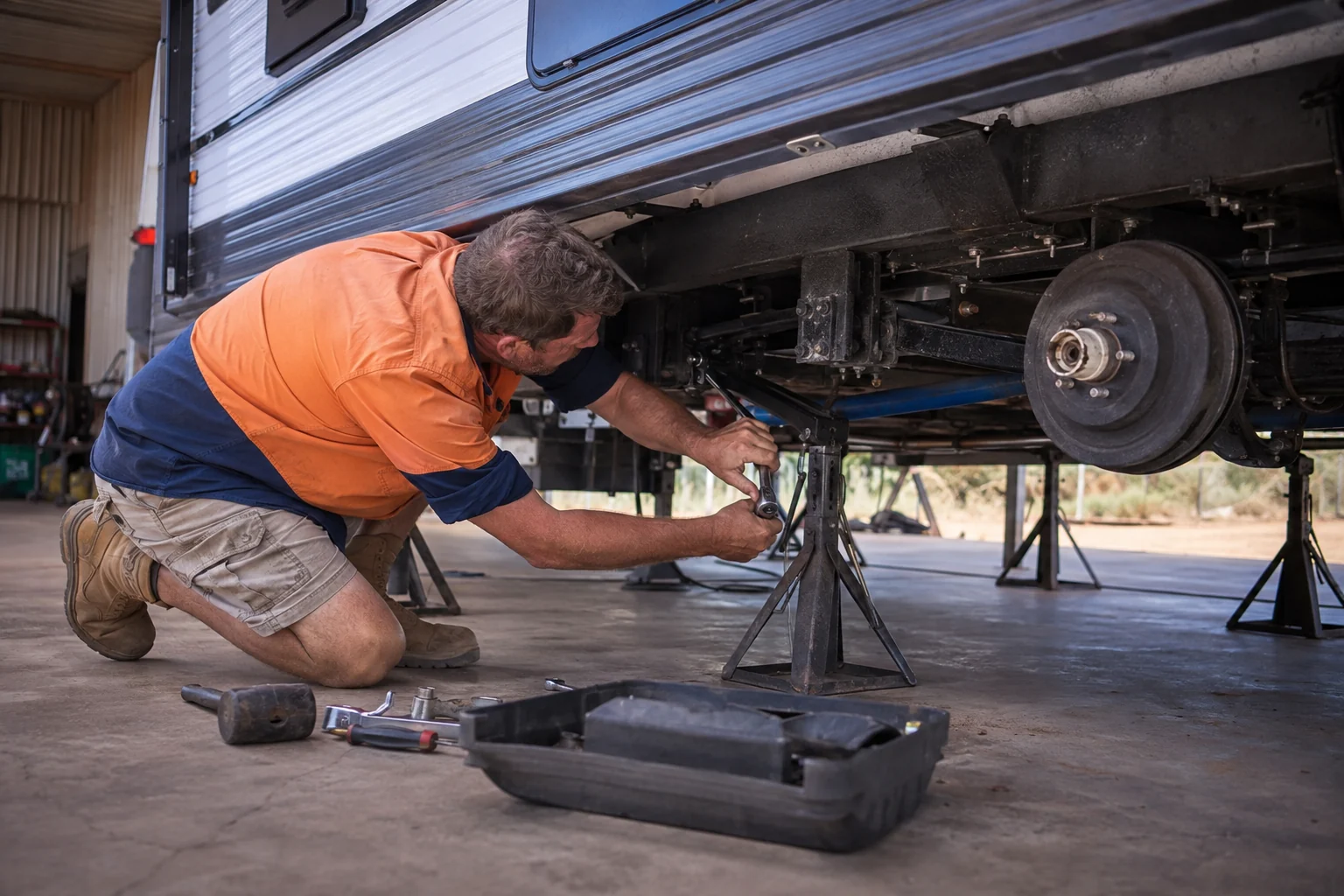
Regional towns along major highways generally have at least one general mechanic, though parts for less common rigs can take days to arrive by freight in genuinely remote areas — another reason a basic tool kit and the ability to do minor repairs yourself is worth having. National roadside assistance memberships (NRMA, RACV, RAC WA and the equivalent motoring club in each state) offer call-out cover that extends well beyond capital cities and is worth having active before you leave, not signed up for after you've broken down.
Grocery and supply planning
Stock up properly in regional centres before a remote leg — small outback roadhouses carry basics but at a real price premium, and fresh produce can be limited. As a rule of thumb, if the next town on your route has under a few thousand people, assume it has fuel and basics but not much else.
A basic pre-remote-leg checklist
Before any stretch longer than a day between towns, it's worth running through the same short list every time rather than trusting memory: full fuel plus a jerry can if the leg exceeds your comfortable range, tanks topped up with water, black and grey tanks emptied at a proper dump point, groceries bought for a few days beyond what you expect to need, and someone told your route and rough timing. None of this is complicated, but skipping one item is exactly how a manageable inconvenience turns into a genuine problem two hundred kilometres from the nearest town.
If you'd rather have someone check the practical side of a specific leg — fuel range, water, the nearest mechanic — before you commit to it, that's part of what a Route Season-Check covers. See Services & Pricing for the full list.
Free account, real perks
Save your fuel and dump-point notes to your free account
- Save routes, camps and gear notes — pick them back up from any device
- 10% off every paid planning service on this site
- A free Route Season-Check (normally AU$59) the first time you save a route